


Paraty guide · Waterfalls
Waterfalls: natural retreats in the Atlantic Forest
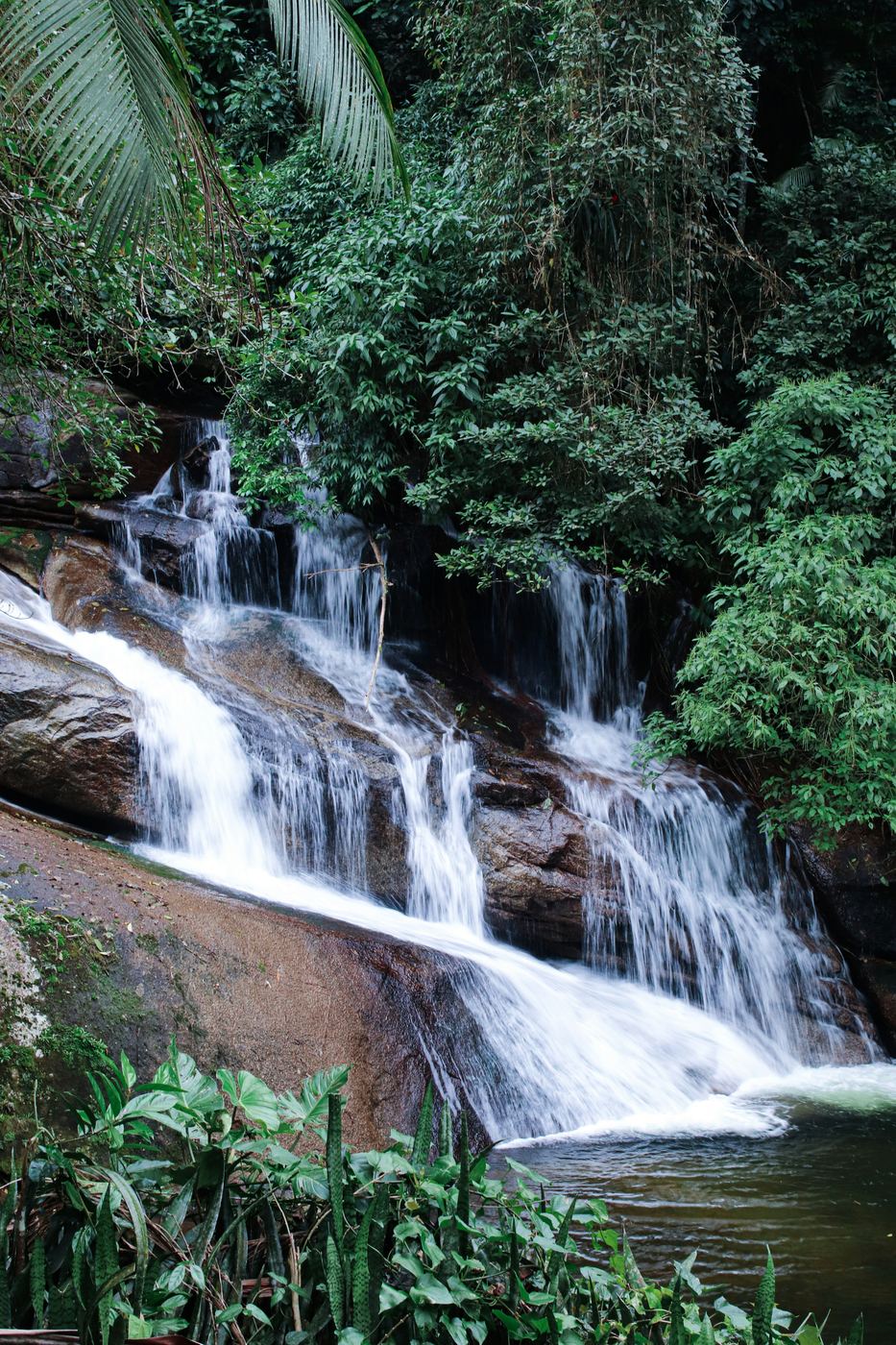
Behind the town rises the Serra da Bocaina, one of the largest continuous areas of Atlantic Forest (Mata Atlântica) in the country, and the rivers running down from it form pools and waterfalls a few minutes from the centre. Most of them lie along the Paraty–Cunha road (RJ-165), the old Caminho do Ouro (Gold Road).
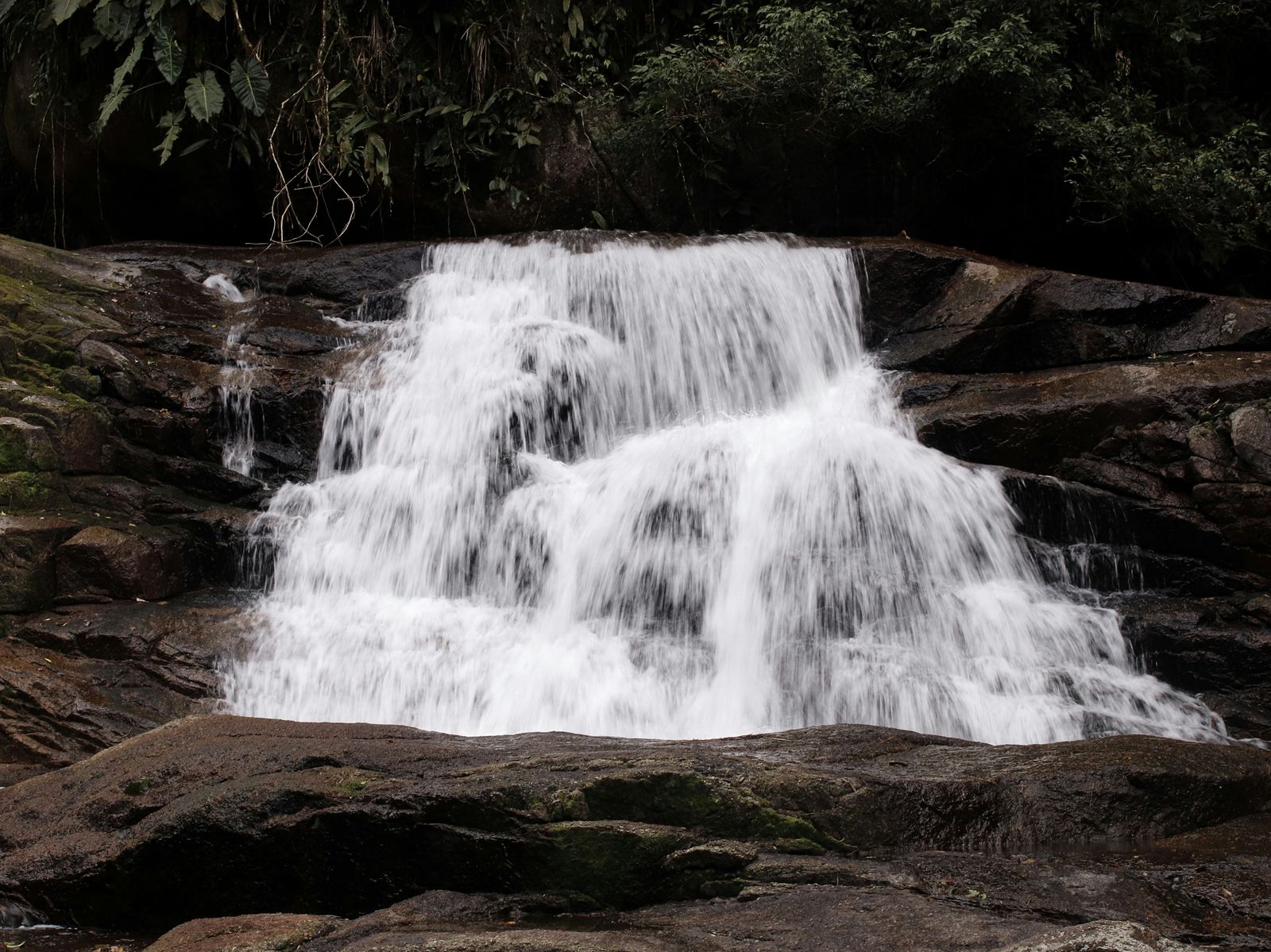
On the Paraty–Cunha road
Cachoeira do Tobogã (Penha). The most famous one: a large slab of smooth rock that you slide down into the pool. It is in the Penha district, about 8 km from the town entrance, next to the Igreja da Penha, which is built on a rock. Paved road and a five-minute walk; entry is free and you pay for parking. Sliding down sitting is easy; the town's youngsters go down standing up, and there have been accidents. Don't try it.
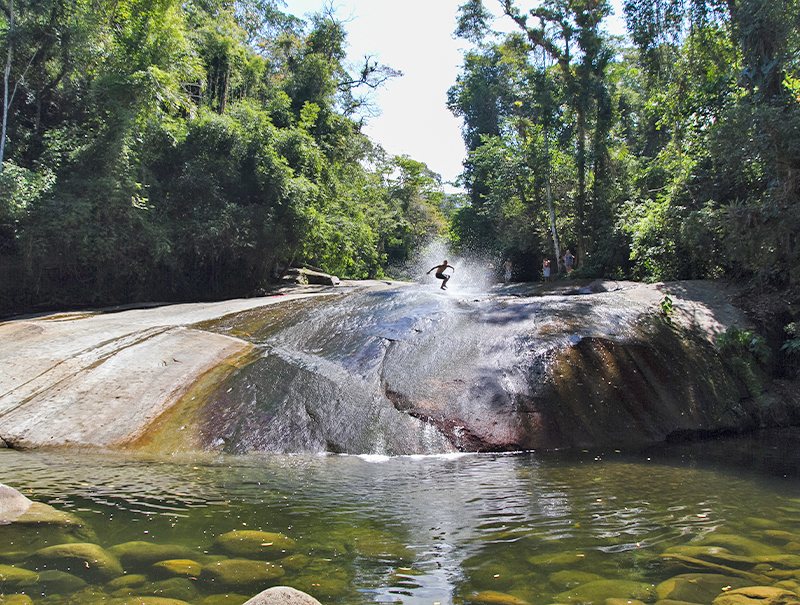
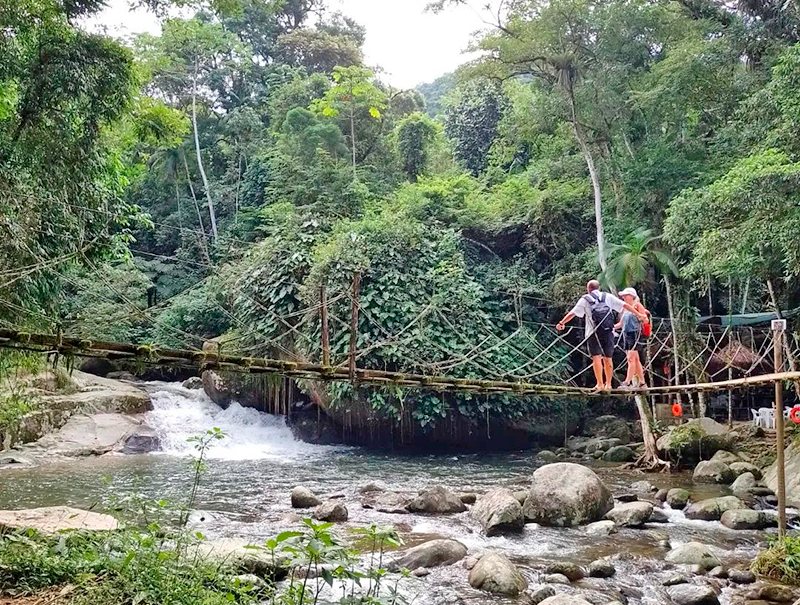
Poço do Tarzan. Just above the Tobogã, a pool among the rocks with a wooden suspension bridge. You can jump off the rock, but check the depth first.
Cachoeira da Pedra Branca and Poço da Usina. About 4 km from the town entrance, along the Estrada da Pedra Branca (a dirt road), followed by a walk of about 15 minutes. It is on private property and charges a small entrance fee.
Sete Quedas. Further along the same road; access is easier in a high-clearance car, and the walk is short.
The jeep tour
This is the trip our guests take most, and with good reason: in a single day, without having to drive, you get to see the main waterfalls on the Cunha road. The open 4x4 jeeps leave late in the morning and come back mid-afternoon, after about 5 to 6 hours. The route varies a little from one agency to another, but it usually takes in the Cachoeira da Pedra Branca and the Poço da Usina, the Tobogã and the Poço do Tarzan, a Caminho do Ouro landmark and an alambique (cachaça distillery), with a cachaça tasting. The trails to the waterfalls are short and easy. Some agencies include the entrance fees; lunch, at a stop along the way, is usually extra.

Bring swimwear, a towel, sunscreen, insect repellent and water. Ask at reception: we will recommend agencies and help you book.
Cachaça and a farm along the way
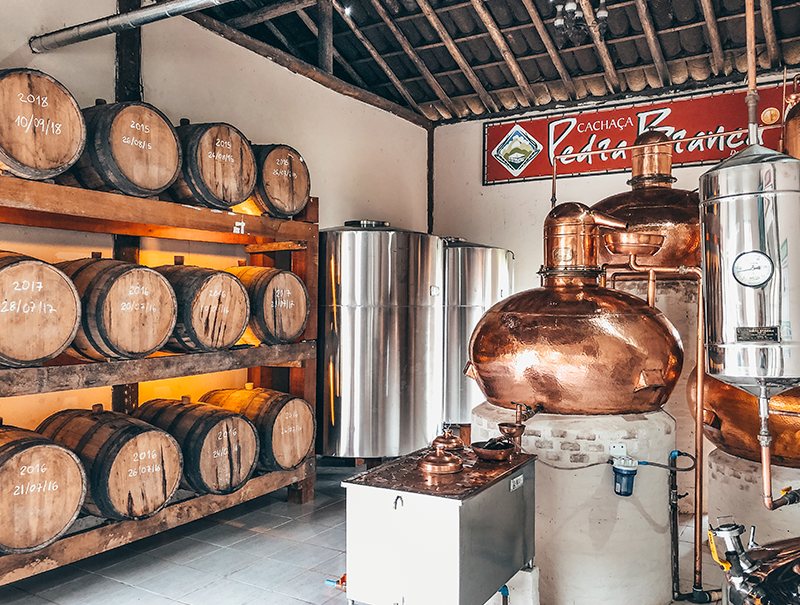
Paraty is cachaça country (see the town guide), and some alambiques are right on this stretch and welcome visitors to show how it is made and pour a tasting: Engenho D'Ouro, in Penha, near the Tobogã, and Pedra Branca and Paratiana, on the Estrada da Pedra Branca. Opening hours change; check before you go. And of course: whoever is driving doesn't taste.
Also on the Estrada da Pedra Branca is Fazenda Bananal, a 17th-century farm in the middle of the forest, with agroforestry, trails and a restaurant serving what is harvested right there. Open Tuesday to Sunday, by reservation.
Towards Angra
Cachoeira do Iriri. It is inside an Indigenous village, near Praia de São Gonçalo, on the Rio–Santos road. Parking is charged and there are handicrafts for sale.
Cachoeira da Graúna. On the Rio–Santos road, easy to reach and busy at weekends.
In the Corisco area, the Poços da Laje e das Andorinhas are calm and shallow, good for an effortless dip.
For hikers: Cachoeira do Saco Bravo
One of Brazil's rare waterfalls that drop straight into the sea, in three falls. You reach it from Ponta Negra (beyond Praia do Sono), on a trail of more than 3 km each way that is considered difficult: it takes the whole day. It lies in a state reserve, the Reserva Ecológica da Juatinga, where going with an accredited guide is compulsory. Avoid rainy days.
Safety
- After heavy rain, the river can rise suddenly: this is the "cabeça d'água" (flash flood). If the water rises or turns muddy, the current gets stronger, leaves and branches start coming down or you hear a roar upstream, get out of the water and head for higher ground at once. Do not try to cross the river. Civil Defence (Defesa Civil): 199; Fire Brigade (Bombeiros): 193.
- The rocks are slippery: shoes with grippy soles help a lot.
- Never jump without knowing the depth.
- Go early: in high season the jeep tours crowd the Tobogã by late morning.
When to go
The waterfalls are fullest in summer (November to March), which is also when it rains most and the risk of a cabeça d'água is highest. From April to October the water is lower and colder, but the weather is more settled.
Updated September 2026