


Paraty guide · The town
Paraty: a guide to the town and its treasures
The historic centre is about 200 metres from the hotel, across the bridge. You can see the essentials in a few hours, but Paraty is best taken slowly: early in the morning, when the streets are empty, and in the late afternoon, when the lanterns come on.
A little history
The settlement was founded in the 17th century between two rivers, the Perequê-Açu and the Mateus Nunes, on land donated on condition that a chapel be built to Nossa Senhora dos Remédios, the town's patron saint to this day. It became a vila (chartered town) in 1667. At the end of the 17th century it became the port of the Caminho do Ouro (Gold Road): gold from Minas came down the mountains and was shipped from here to Rio and Europe, while tools and enslaved people brought from Africa went up.
In the early 18th century a new road, straight to Rio, took the gold elsewhere. Paraty turned to sugar cane and cachaça, then to coffee from the Vale do Paraíba, and went into decline at the end of the 19th century, with the railway and the abolition of slavery. It stayed almost isolated for about a hundred years, and it was this isolation that preserved the town. It was rediscovered with the road to Cunha, reopened in 1964, and the Rio–Santos road in the 1970s.
The town has been protected by IPHAN (the national heritage institute) since 1958 and a National Monument since 1966. In 2019, "Paraty and Ilha Grande: Culture and Biodiversity" became a UNESCO World Heritage Site, Brazil's first mixed (cultural and natural) site. Paraty has also been a UNESCO Creative City of Gastronomy since 2017.
The historic centre
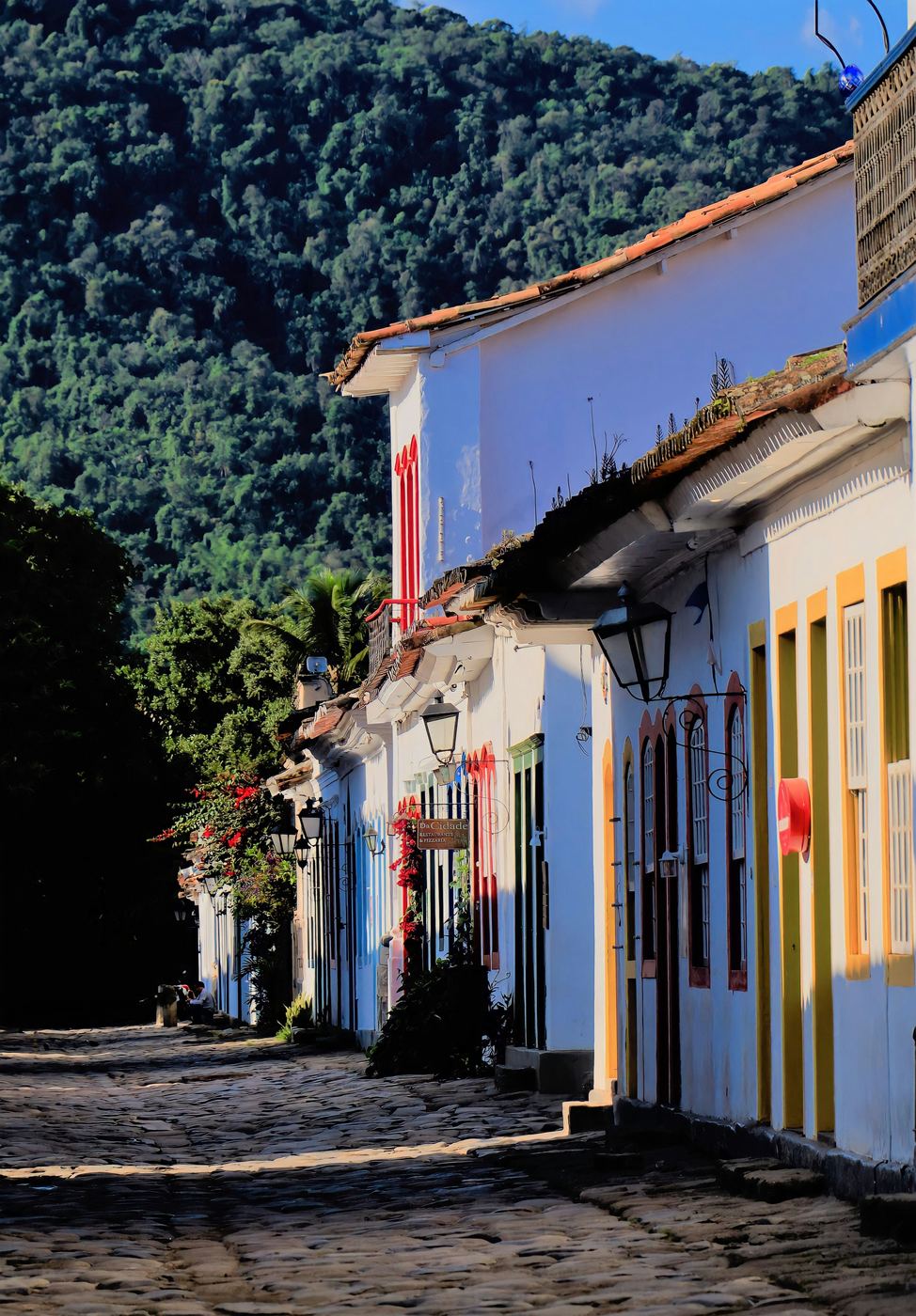
The streets are paved with irregular stones, the "pés-de-moleque" (pé-de-moleque cobblestones), and the centre is closed to cars. At the highest tides, especially at full moon and new moon, sea water flows into the lowest streets. It is said the streets were laid out this way on purpose, so the tide would wash the town; it is the story everyone tells, but no one has proved it.
The four churches tell the story of colonial society, each one belonging to a different group:
- Santa Rita (1722), built by freed men of mixed race, is the town's postcard view, on the edge of the bay. It houses the Museu de Arte Sacra (Museum of Sacred Art).
- Nossa Senhora do Rosário e São Benedito (from 1725), the church of the brotherhoods of enslaved Black people.
- Matriz de Nossa Senhora dos Remédios (1787–1873), the largest, with towers that were never finished.
- Nossa Senhora das Dores (1800), the elite's "Capelinha" (little chapel), on Rua Fresca, facing the sea.
Casa da Cultura. A mansion from 1754 turned into a cultural centre, with exhibitions on the history and people of Paraty. Free entry, Tuesday to Saturday.
Forte Defensor Perpétuo. It stands on the Morro da Vila Velha, where the first settlement grew up, on our side of the river, in Pontal; you walk up a path through the forest. At the top: old cannons, a small museum and views over the bay. Free entry.
Trilha do Caminho do Ouro. A stretch of the original stone-paved road, in Penha, on the road to Cunha. It crosses private land, so it can only be visited with an authorised guide: an easy walk of about three hours.
Cachaça
Paraty had around 150 alambiques (cachaça distilleries) in the early 19th century, and "paraty" was once a byword for cachaça. In 2007 Paraty cachaça received the country's first Indicação de Procedência (geographical indication) for cachaça, and in 2024 the Denominação de Origem (designation of origin). Some distilleries welcome visitors, among them Maria Izabel (by appointment), Engenho D'Ouro, Pedra Branca, Paratiana and Coqueiro, which dates from 1803. In August the town holds the Festival da Cachaça, Cultura e Sabores.
Where to eat
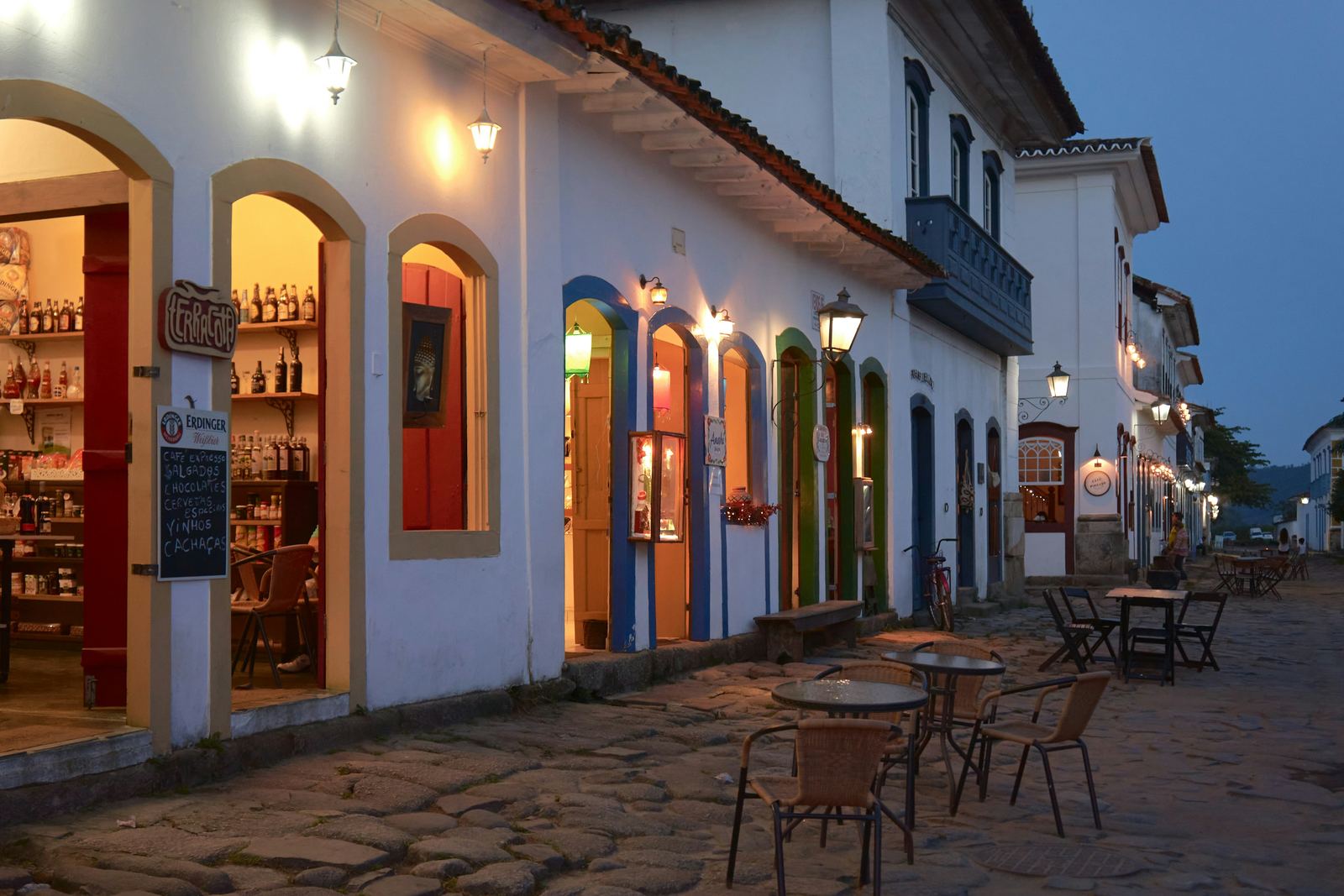
Paraty's signature dish is peixe com banana (fish with banana), from the caiçara tradition (the local coastal fishing culture), and banana turns up in many things, from paçoca to dessert. Our favourites:
- Banana da Terra, in the historic centre: chef Ana Bueno has been serving caiçara cooking for more than 30 years. This is the place for peixe com banana.
- Quintal das Letras, in the historic centre, the restaurant of the Pousada Literária: for a special dinner.
- Thai Brasil, on Rua do Comércio: Thai cooking with local ingredients.
- Fazenda Bananal, on the Estrada da Pedra Branca, a few minutes from town: lunch on the farm, with what is grown there. Open Tuesday to Sunday, by reservation.
Practical tips
- Shoes: trainers or sandals that strap on, with firm soles. Heels on the cobbles are a no-go.
- Car: leave it at the hotel, which has parking (rare in Pontal); the centre is closed to cars.
- Quay: the boat trips leave from the tourist quay, a few minutes' walk away.
- Bus station: on Rua Jango Pádua, near the historic centre.
- Taxi: Uber works poorly in Paraty; taxis have fixed prices.
- Guide: on a first visit, a guided walk of about two hours around the centre is well worth it.
Updated September 2026